
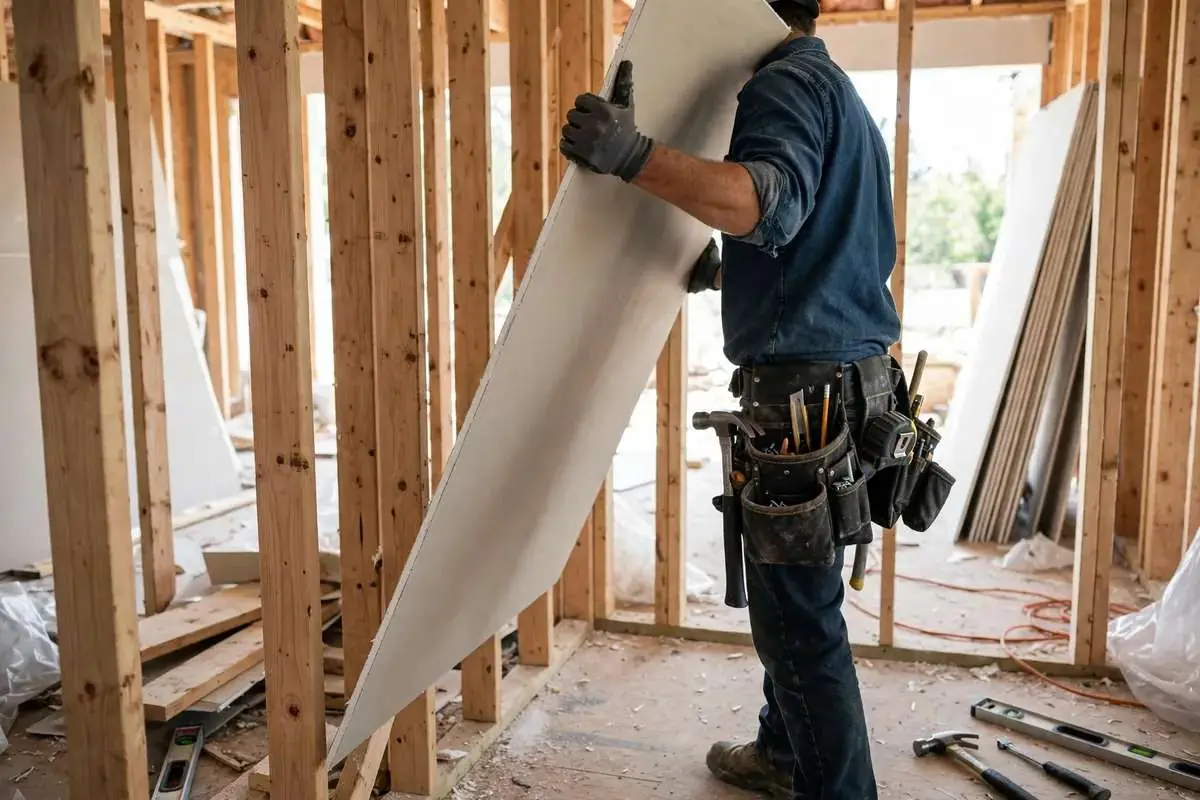
Bathroom drywall in Silver Spring: built for steam
Bathroom drywall in Silver Spring, MD lives the hardest life in the house. Showers pump steam twice a day. Splashes hit the walls. Humidity swings wildly. Standard drywall, installed like a bedroom wall, fails here. It is only a matter of when.
How bathroom drywall differs
Board made for damp air. Not standard drywall. It stands up to humid air without feeding mold.
Cement backer where tile goes. Tile needs a base that will not swell. Backer board, taped at the seams.
Sealed transitions. Where board meets tub or tile, we keep water out of the wall. Failed caulk is the top cause of soft board.
Vent-aware finishing. We finish around the fan opening. A bath with no fan will eat any drywall job.
The usual Silver Spring bathroom story
We open a 1960s bath and find layers of old repair. All of it soft around the tub. The fix is to strip back to solid. Replace with the right materials. Finish it once, properly. It costs more than a patch. It is the last time you pay for it. See drywall vs plaster.
How it works: bathroom drywall
Bathroom jobs are part drywall, part detective work. Old baths hide surprises. Here is our process.
We open it up carefully. Old tile and board come out around the wet areas. We see what the last thirty years did in there.
We replace what is soft. Soft board goes. So does failed backer. We cut back to solid, dry material.
We hang the right materials. Damp-smart board on the walls. Cement backer where tile goes. Each material where it belongs.
We seal the transitions. Tub to wall. Tile to board. These joints get detailed so water stays out of the wall.
We finish for a wet room. Taped, coated, and ready for tile or paint. The bathroom leaves ready for its next twenty years.
What to expect on timing
A bathroom drywall job takes three to five work days. Demo takes a day. Rebuild and finishing take the rest.
You lose the bathroom during the work. We work fast and clean. But plan around it for the week.
Tile goes after we finish. We hand the tile setter a flat, solid base. That is what makes tile last.
The vent fan conversation
Every bathroom job gets this talk. Steam needs somewhere to go. A vent fan moves it outside.
Baths without fans eat drywall. We see it constantly. Soft board around the shower. Mold in the corners. The fan prevents most of it.
We handle the drywall around the fan box. Your electrician handles the fan and the wiring. Ask us on the visit and we will walk you through it.
Tile backing, done right
Tile is heavy and wet. It needs cement backer board. Not drywall. Not green board from decades past.
Backer seams get taped with the right tape. Corners get detailed. The tile setter gets a base that will not swell or crumble.
This is the step cheap jobs skip. It is also the step that decides whether your tile lasts five years or twenty-five.
Silver Spring bathroom notes
1960s baths are our most common. Layers of old repair around the tub. Soft board behind the tile. We strip it back and start clean.
Small baths are the norm here. Tight spaces make the work slower. We price for the real conditions.
Plaster baths show up in the oldest homes. Sound plaster stays. Crumbling plaster goes. See plaster repair.
What to ask on your free visit
Bathrooms punish shortcuts. These questions separate a real bid from a guess.
- What goes behind the tile — backer board or drywall?
- How do you seal the tub-to-wall joint?
- My bathroom has no fan. What do you recommend?
- Will you open up the soft spots before you quote?
- Who does the tile after you finish?
Cost
Bathrooms run higher per foot than bedrooms. The materials cost more. The detailing is slower.
A note on prices: costs go up and down. No two jobs are the same. Treat numbers here as starting points, not quotes. Your written estimate is the real number for your project.
Call (301) 679-9193 for a free visit.
Related services & guides
More on this topic from Silver Spring Drywall Pros: